Ask ten romance readers what is dark romance and you will get ten answers, three arguments, and at least one person insisting the whole label is marketing. That confusion is not the reader’s fault. Dark romance is the fastest growing corner of the genre and the least consistently defined, which means a book shelved under it might be a mafia arranged marriage with one threatening scene, or it might be something that opens with a full page of content warnings.
This guide answers it properly. What the label covers, what it keeps getting confused with, why readers are drawn to it, and exactly how dark each book below gets, so you find your own line before a book finds it for you.
What Is Dark Romance, Exactly?
A dark romance is a love story where the conflict lives inside the relationship instead of outside it.
In most romance, something external keeps two people apart. A misunderstanding, a job, a family, a decade of silence. The couple is on the same team against the obstacle. In dark romance, the obstacle is one of the leads. The hero is the threat. The question stops being “will they get past the thing in their way” and becomes “should she want this at all, and what does it say that she does.”
Three markers show up in almost every book that earns the label. The love interest is morally grey at best and genuinely villainous at worst, and the book does not quietly redeem him in chapter four. There is a power imbalance the story refuses to resolve early, because the imbalance is the point. And the book treats behaviour that would be a crime in any other genre, obsession, captivity, coercion, violence, as the romantic engine rather than as the thing the hero must overcome.
One rule survives all of it. Dark romance is still romance, so it still owes you a happy ending or at least a hopeful one. A love story that ends in ruin is tragedy. The exception is series, where a first book can leave you in the dark on purpose and the resolution arrives two volumes later.
So what is dark romance in one sentence? It is a romance that puts the danger inside the love story and then makes you want it anyway.
What Dark Romance Is Not
Four things get filed here by mistake, and untangling them solves most of the arguments.
It is not romantic suspense. There the threat is external and the hero is the protection. In dark romance the hero is frequently the stalker. Same tension, opposite source.
It is not horror romance. Horror wants you frightened. Dark romance wants you compromised, which is a different feeling entirely. The books that sit in both camps are rare enough to be notable.
It is not a book about hard things. Grief, illness and addiction in a backstory make a book heavy, not dark. That is angst. The difference is whether the darkness sits in the history or in the relationship.
It is not automatically explicit. Heat level and darkness are separate dials. There are filthy books with no darkness in them at all, which is what most steamy romance books are, and there are dark books that are far more disturbing than they are graphic.
Darkness Runs on Two Axes, and That Is Why Nobody Agrees
Here is the thing almost no definition mentions, and it is why two readers can finish the same book and disagree completely about whether it was dark.
The first axis is content severity. What actually happens on the page. Kidnapping, violence, blood, non-consent, body count.
The second axis is emotional cruelty. How the love interest treats the person he loves. Contempt, humiliation, punishment, degradation.
These move independently. A serial killer romance can be extreme on the first axis and tender on the second, because the couple is never cruel to each other. A bully romance can have almost no violence in it and be far harder to read, because every scene is aimed at the heroine. When someone says “that was not even dark” and someone else says “I could not finish it,” they are usually not disagreeing. They are measuring different axes.
Every book in the list below carries a rating so you can see which axis it is loaded on.
Why Readers Love Dark Romance
The first reason is control. A reader holds the book, sets the pace, and can close it. Fear inside a container you own is not the same as fear, it is closer to a rollercoaster, and the appeal is nearly identical. Nothing in a dark romance can actually reach you, which is exactly what lets you go somewhere you would never go otherwise.
The second is the devotion. Strip the violence out of the dark romance trope catalogue and what is underneath is obsession offered as a love language. The hero who would burn a city down, the one who cannot be reasoned with about her safety, the “touch her and die” reflex that shows up in nearly every book on this shelf. In a genre where the deepest fear is being forgettable, a man who is structurally incapable of getting over you is the loudest possible answer to it. That is the same wire these books share with the gentlest second chance story, which is why so many readers keep one foot in each.
The third is permission. Reading is not endorsing, and readers of this genre are unusually clear about that. A dark romance lets someone examine power, want and surrender where nobody is harmed and nothing is real. The fantasy is not the crime. It is being wanted with an intensity ordinary life is too polite to produce.
The Dark Romance Tropes That Define the Genre
Most books on this shelf are built from a small number of parts, and knowing the names makes the whole category navigable. For the wider map, the full romance tropes guide covers the lighter end.
Captive romance. Kidnapping, confinement, a heroine with no exit. The oldest and least softened form.
Mafia romance. Arranged marriages, family debts, a hero whose job is violence. So what is mafia romance doing here when much of it is fairly tame? The power imbalance. Even the softest mafia book hands one person absolute power over the other.
Stalker romance. He is watching her before page one. The fastest growing subgenre, and the one with the widest gap between titles.
Bully romance. Cruelty first, tenderness much later, usually on a campus. Low on violence, high on the second axis.
Why choose. More than one love interest and no elimination round. Dark because the group dynamic concentrates power.
Touch her and die. Less a plot than a reflex, and the single most requested feeling in the genre.
The Dark Romance Ladder: 12 Books and How Dark Each One Gets
These are ordered as a reading path rather than a ranking, running from gateway to deep end, with three deliberate off-ramps built in at the points where readers most often discover their limit. Each entry carries a darkness rating out of five.
1. Vicious by L.J. Shen
Baron “Vicious” Spencer has spent years making Emilia LeBlanc’s life unbearable, starting when her family moved into his guest house and she became the one thing he could not have and would not leave alone. It is the book most readers name when asked where they started, because it performs the genre’s central move in its mildest form. The hero is the problem, no grand gesture redeems him on schedule, and the story makes you sit with wanting him regardless.
Darkness: 2 of 5. Humiliation and contempt, no violence toward the heroine.
Read this if: you want to find out whether this genre is for you before committing to anything heavier.
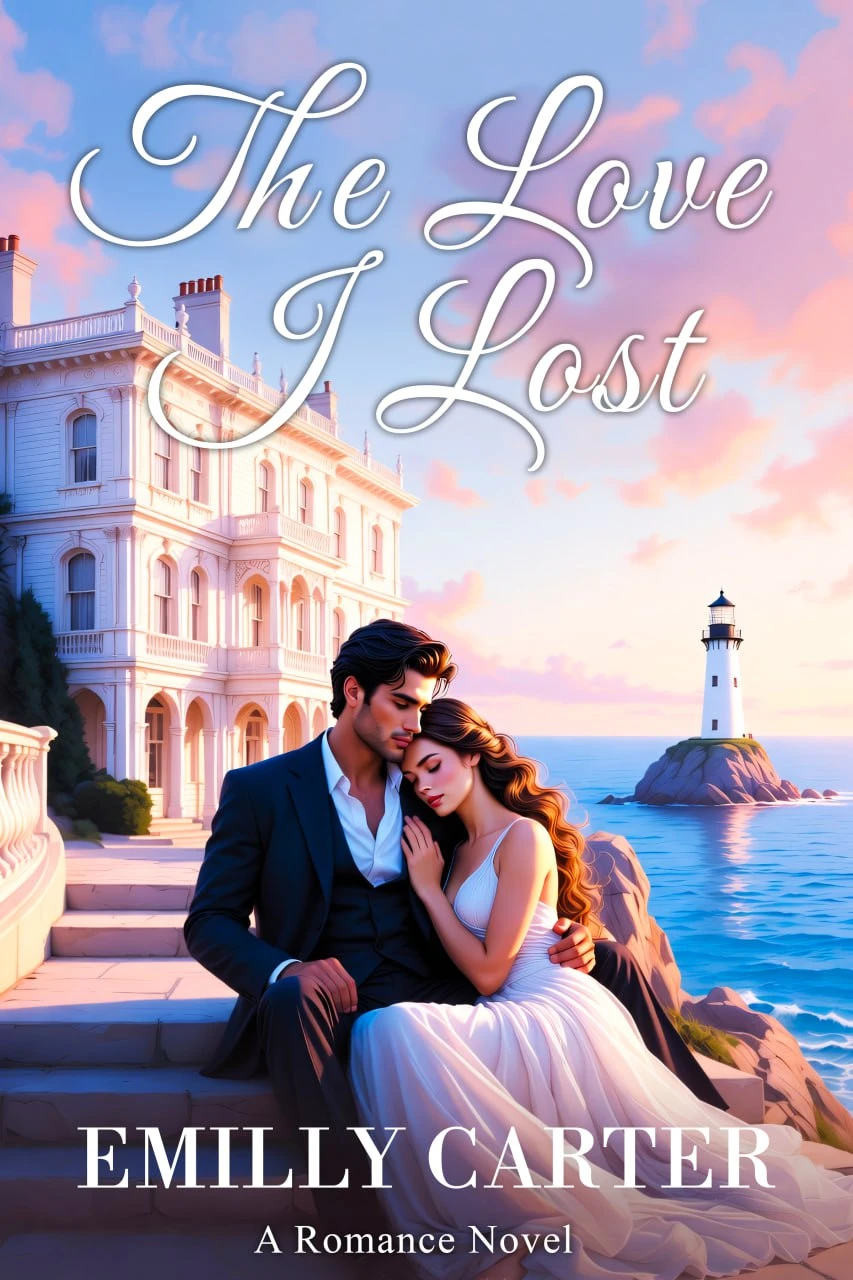
2. The Love I Lost by Emilly Carter
Full honest disclosure: this is not a dark romance, and it is on this ladder on purpose. Elena Reyes takes a job restoring a crumbling Victorian inn on the Maine coast and walks into Marcus Sullivan, the college boyfriend she believed abandoned her a decade ago. Their breakup was engineered by someone they both trusted, a calculated betrayal that killed a proposal he never got to make. He kept the ring for ten years anyway. What this book shares with the shelf around it is the total, unreasonable devotion that dark romance readers actually come for. What it does not share is the cost. Hidden letters from 1915 surface in the inn’s walls, and the same buried secret machinery that powers the darkest books here drives this one toward repair instead of ruin.
Darkness: 0 of 5, and that is the point.
Read this if: you want the consuming obsession without the wreckage, or you need something to read at 2am after the book at number eleven.
3. Twisted Love by Ana Huang
Alex Volkov is cold in the way a building is cold, and Ava Chen is his best friend’s sister, which he has spent years using as a reason. Huang’s book became the gateway title of modern dark romance and earns that job honestly, keeping the hero’s ruthlessness fully intact while pointing all of it away from the woman he is protecting. It is also the softest book in its own series, which gets considerably meaner as it goes. If it lands, the full list of books like Twisted Love is the natural next step.
Darkness: 2 of 5. Emotional coldness and one act of off page violence.
Read this if: you want the most popular on ramp in the genre, and a hero whose ruthlessness never once turns on her.
4. The Sweetest Oblivion by Danielle Lori
Elena Abelli is the obedient daughter of a New York mafia family, raised to be useful in a marriage she will not choose. Nicolas Russo is the most feared man in their world and the first person to look at her and see something other than a bargaining chip. The engagement everyone is planning is not the one either of them wants. Lori writes the mafia subgenre at its most controlled, which makes it a good place to test whether the power imbalance itself is the appeal, separate from any violence.
Darkness: 3 of 5. Violence, coercion and a controlling hero, none of it aimed at her.
Read this if: you want to know whether mafia dark romance books are your lane before trying a harder one.
5. Corrupt by Penelope Douglas
Erika Fane spent years quietly wanting her boyfriend’s older brother. Then Michael Crist and his three friends went to prison, partly on the strength of what she said, and now they are out. Devil’s Night is the series that taught a generation of readers what a revenge plot feels like from inside the wanting rather than outside it. Douglas keeps consent a live question instead of a settled one, and that is precisely why this is the book readers warn each other about before recommending it anyway.
Darkness: 4 of 5. Revenge, dubious consent, group dynamics, sustained intimidation.
Read this if: you are ready for a book that does not reassure you about what you are enjoying.
6. The First Time I Met You by Emilly Carter
The second off ramp, placed here because Corrupt is where a great many readers find their line. This is the prequel, and it goes back to Elena and Marcus at nineteen and lets the friendship tip over into something else the way it actually does, one conversation and one missed chance at a time. Reading it is a specific kind of ache, because you already know exactly how much of this they are going to lose and they do not. Every good scene carries weight it has not earned yet. It is the gentlest book in the trilogy and somehow the one that does the most damage.
Darkness: 0 of 5. The only cruelty in it is structural, and it belongs to the reader.
Read this if: you need a few hundred pages where nobody is in danger and it still hurts.
7. Butcher and Blackbird by Brynne Weaver
Sloane Sutherland and Rowan Kane are both serial killers who hunt other serial killers, and they meet once a year to compete at it. The body count is enormous, the gore is explicit, and the book is consistently, deliberately funny. It is also the cleanest possible proof that the two axes are real, because nobody in this romance is ever once cruel to the person they love. If you assumed dark romance meant a hero who hurts the heroine, this is the book that rearranges the definition.
Darkness: 4 of 5 on content, 1 of 5 on cruelty.
Read this if: you want to see how far the content can go while the relationship stays kind.
8. Credence by Penelope Douglas
After her father’s death, Tiernan de Haas is sent to a mountain in Colorado to live with her guardian Jake Van der Berg and his two sons, snowed in for months with no road down. It is why choose, the taboo comes from proximity rather than blood, and it is the title most reliably capable of splitting a book club in half. Douglas writes isolation as a pressure system, where having nowhere else to go does more work than any threat could.
Darkness: 4 of 5. Taboo, a hard power imbalance, and a setting with no exit.
Read this if: you want claustrophobia rather than violence to be the thing that unsettles you.
9. The 10 Years We Were Apart by Emilly Carter
The last off ramp, and the place the trilogy lands. Elena and Marcus finally have the truth. What they do not have is the decade, and the book is honest enough to admit no reconciliation gives it back. There is a conversation about two thirds in, about the ordinary things they missed rather than the dramatic ones, that does more damage than most death scenes manage. The ending is earned rather than gifted. You do not get the ten years back. You get everything after them.
Darkness: 0 of 5. All of the devotion, none of the debris.
Read this if: you have been reading obsession all week and want to find out what it looks like when it is safe.
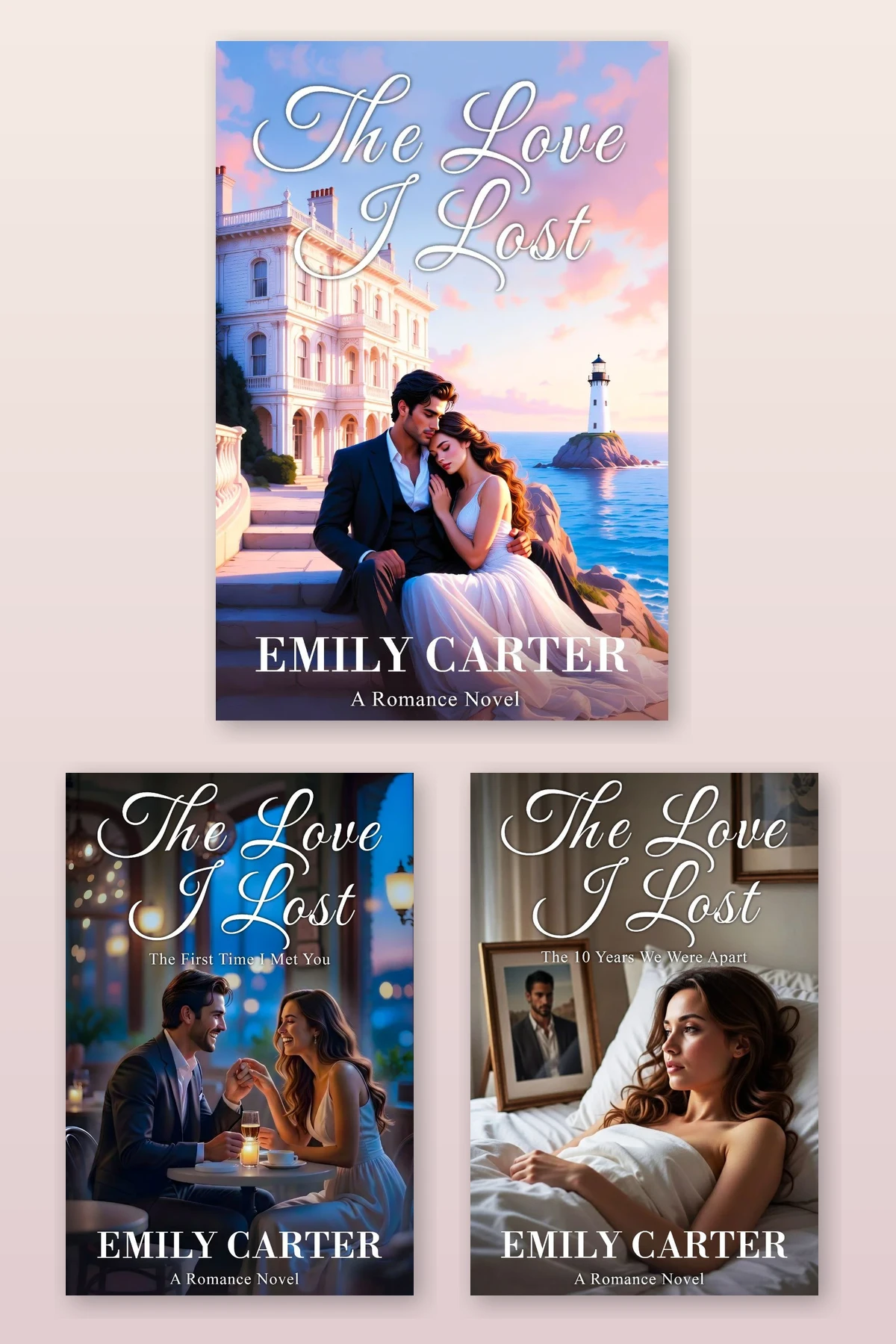
The complete Love I Lost trilogy — available now
10. Lights Out by Navessa Allen
Aly Cappellini is a nurse who posts anonymous videos about her thing for masked men. Josh Moore is one of the men watching, and he is already following her home. Allen’s book took over social media by being completely explicit about a fantasy other stalker romances dress in plot, and it is smarter than its reputation, building the consent in plain sight long before anything becomes frightening. It is also one of the most graphic books here.
Darkness: 4 of 5. Stalking, knife play and extremely explicit content.
Read this if: you want the stalker fantasy written by someone entirely unembarrassed by it.
11. Haunting Adeline by H.D. Carlton
Adeline Reilly inherits her great grandmother’s estate and finds a house holding a decades old disappearance. Zade Meadows is inside her life before she knows his name. He is a vigilante who hunts traffickers, which the book uses to complicate him rather than to excuse him. This is the title people mean when they say read the content warnings first, and Carlton puts them at the front for a reason. It is not a place to start. Readers who finish it usually go straight to more books like Haunting Adeline.
Darkness: 5 of 5. Stalking, on page assault, graphic violence. Read the warnings.
Read this if: you know your limits precisely and this is inside them.
12. Captive in the Dark by C.J. Roberts
The origin point for most of what sits above it on this list. Olivia Ruiz is taken by Caleb, a man trained to break women for sale, who intends to deliver her to the person he has spent his life planning to destroy. It proved a mainstream audience existed for this, years before the label did, and it remains one of the least softened examples anyone can name. Be aware that the first volume does not end happily. The trilogy resolves, but book one leaves you exactly where it wants you.
Darkness: 5 of 5. Kidnapping, non-consent and captivity. The deepest end of this list.
Read this if: you want the book the whole subgenre is descended from, with nothing sanded off.
How to Read Dark Romance Without Getting Blindsided
Three habits make the difference between a book that thrills you and one that ruins your week.
Read the content warnings, and read them before the blurb rather than after. Most authors now publish them at the front or on their website, and the ones who do not are covered on StoryGraph by readers who did the work. Treating warnings as spoilers is how people get ambushed.
Trust the rating, not the cover. Dark romance recommendations get passed around with almost no calibration, and the phrase “it is not that dark” means nothing without knowing which axis the speaker is measuring. Ask what actually happens instead.
Give yourself permission to stop. The genre has a strange culture of endurance, as though finishing proves something. It does not. Putting a book down at forty percent is information about your line, which is the single most useful thing a dark romance reader can have.
FAQ
What is dark romance in books?
Dark romance is a love story where the conflict comes from inside the relationship rather than outside it. The love interest is morally grey or genuinely dangerous, there is a power imbalance the book refuses to resolve quickly, and behaviour that would be criminal in another genre drives the romance instead of blocking it. It still ends happily or hopefully, which is what separates it from tragedy.
What is the difference between dark romance and romantic suspense?
The source of the threat. In romantic suspense the danger is external and the hero is the protection, so the couple faces it together. In dark romance the hero is frequently the danger, and the tension comes from the heroine wanting him anyway. Same adrenaline, opposite structure, and it is the single most common mix up in the genre.
Are dark romance books always explicit?
No. Heat and darkness are separate dials. Plenty of dark romance is explicit, but some of the most unsettling books in the category are restrained on the page, and there are extremely steamy books with no darkness in them at all. Judge the two independently rather than assuming one predicts the other.
What are the best dark romance books for beginners?
Start with a book that is low on emotional cruelty even if the content is intense. Twisted Love and Vicious are the two most common entry points, both high on atmosphere and low on anything aimed at the heroine. Avoid captive and stalker titles until you know where your line sits, and read the content warnings for every book before you open it.
Why do readers like dark romance?
Three reasons, usually together. It offers fear inside a container the reader controls completely. It delivers devotion at an intensity ordinary life never produces, which is the same appeal driving the gentlest second chance stories. And it allows someone to examine power and surrender in a place where nobody is harmed and nothing is real.
You Might Also Love
- Books Like Twisted Love
- Books Like Haunting Adeline
- Forbidden Romance Books
- Steamy Romance Books
- Closed Door Romance Books
- What Does MMC Mean in Books
- Romance Genres
Where to Go From Here
If the ladder above told you that what you actually want is the devotion rather than the damage, the off ramps are a real destination and not a consolation prize. The Love I Lost trilogy is available at the Emilly Carter shop, and it delivers ten years of obsession with everyone intact at the end. For the darker direction, forbidden romance books sit roughly halfway between the two ends of this list.
Emilly Carter is the author of The Love I Lost trilogy, available now.